Tuesday, October 14, 2014
Top Quality Essential Oils
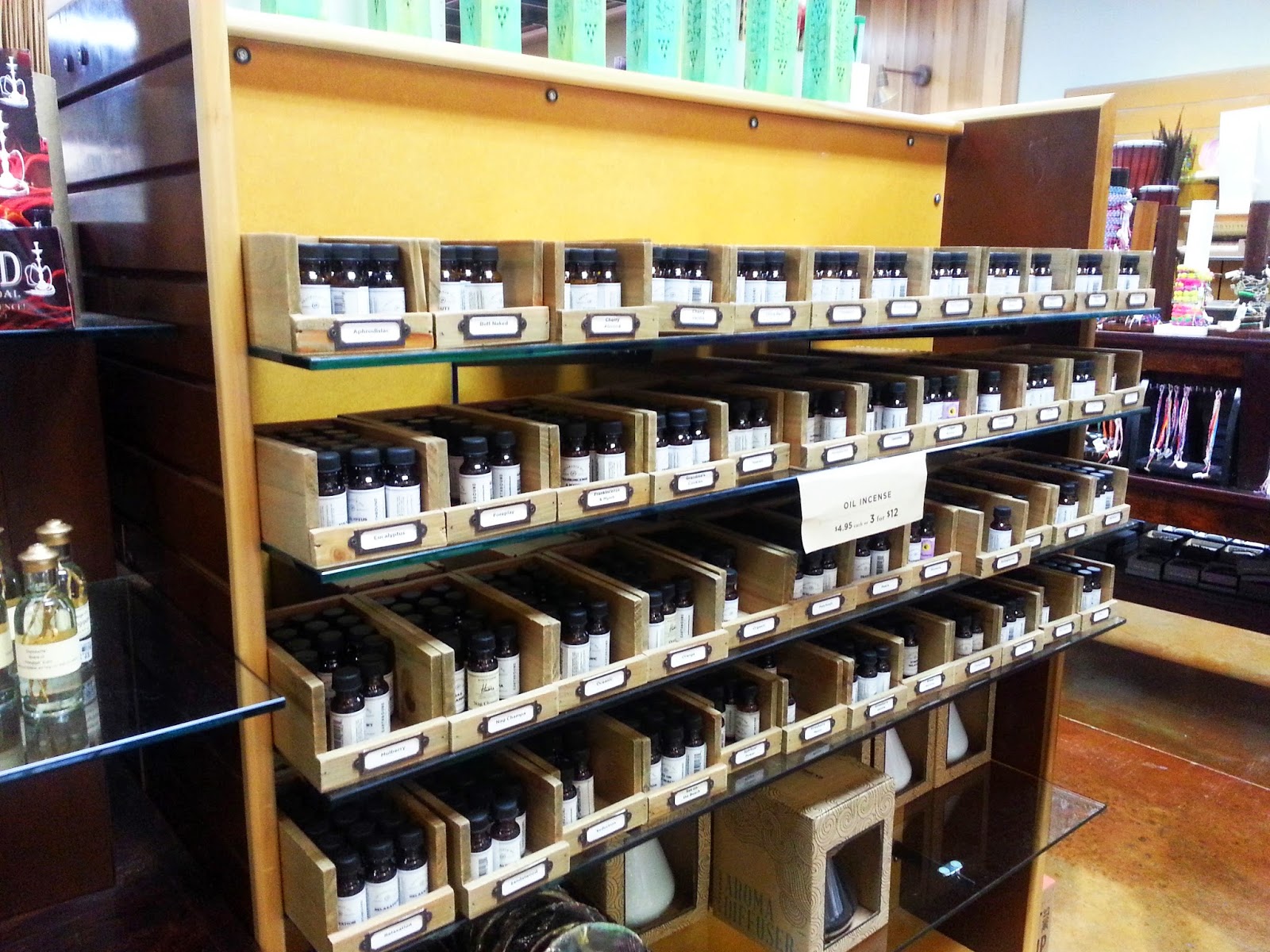
A few days ago, I was at the mall and went into an incense/hippie type shop. I like going into different places just to look around. When I got to the back of the store, I saw the oil display above. I couldn't help but smile (and of course take a picture).
Before discovering the difference in the quality of oils, I purchased a few oils from various places. I think the first one was tea tree oil. Lice was going around the school and I heard that rubbing a drop on the back of kids' necks will keep them away. I bought a bottle at our local health food grocery store. It is a common brand that only costs about $7. I thought it smelled awful, but I consistently applied it every morning until the lice talk died down. I even told 2 of my neighbors about it and they bought bottles from the store to do the same thing. None of our kids got lice, so we were all thrilled. When it was over, I put it away in my bathroom cabinet and decided I'd use it again for the next outbreak.
One of the first oils I bought from a top quality company was Melaleuca (aka tea tree) oil. I still had the other bottle in my bathroom, but my friend had me compare it to hers. Her oil was completely different. It smelled better and I noticed that I was just drawn to it more. After comparing them, I noticed that the one from the store smelled like it had rubbing alcohol in it. I put a drop of each on my skin and was just as surprised by the differences. I never looked back.
Several months later, my mom told me that she had a tickle in her throat. I told her that a drop of Melaleuca under the tongue had done wonders for my kids and me. After talking, she decided that she wanted to test it out. She went down to the drug store and bought a bottle of whatever brand they had there. The next morning, she called me and told me that the second the drop hit her mouth she gagged and ended up puking. She couldn't believe that the kids or I had done it. I explained that this can only be done with high quality oils with a label listing it is for dietary use. She looked on her bottle and it said "not for consumption." Since then, she has grown to love high quality oils too.
These stories are important to tell because oils are not created equally.
Friday, October 10, 2014
Diffusing Autumn
This morning, I went to Costco and the whole store smelled like pumpkin pie. That is one of my favorite desserts. I found myself wandering around to see where the smell originated. Of course, it was back in the bakery area. I had no desire to buy a gigantic pie, so I was thrilled to see that they were offering samples. It really put me in the mood for changing leaves and cooler weather, which doesn't happen in my town for at least a few more weeks. I'm actually out of luck as far as the leaves go.
On the way home, I remembered the Autumn Diffuser clip above. I couldn't wait to come home and fill my house with the smell of Fall. Diffusing is even better than a pie because there are no calories to ingest, it is cheaper, and there are numerous health benefits.
Kids Being Adventurous Eaters
One of the struggles that most moms deal with is getting their kids to try new foods. Sometimes, we get stuck in a rut. ...or more likely - get tired of using all of our compelling skills to pull our kids out of an eating rut. I saw this article in the International New York Times and decided to share it. Hopefully, it gives us new inspiration for encouraging our kids to try different kinds of healthy food:
Rise and Shine
Rise and Shine

Thursday, October 9, 2014
Benefits of Melissa (Lemon Balm)
One of my favorite plants in my herb garden is Melissa. My daughter suggested that we pick and clean some of the leaves and put them in a pitcher with our drinking water. I have not made it into a tea as described below, only used it in the water we drink. I also sometimes add Lemon Oil or cut up some fresh lemons and add them. The water tastes wonderful.
Lemon Balm/Melissa (Melissa Offiinalis)
Lemon Balm was dedicated to the goddess
Diana, and used medicinally by the Greeks some 2,000 years ago. In the
Middles Ages lemon balm was used to soothe tension, to dress wounds, and
as a cure for toothache, skin eruptions, mad dog bites, crooked necks,
and sickness during pregnancy. It was even said to prevent baldness. As a
medicinal plant, lemon balm has traditionally been employed against
bronchial inflammation, earache, fever, flatulence, headaches, high
blood pressure, influenza, mood disorders, palpitations, toothache and
vomiting. A tea made from Lemon balm leaves is said to soothe menstrual
cramps and helps relieve PMS.
The herb is often used for nervous agitation, sleeping problems, functional gastrointestinal complaints, menstrual cramps and urinary spasms.
It is thought that the lemon balm plant contains chemicals that relax muscles, particularly in the bladder, stomach, and uterus, thereby relieving cramps, gas, and nausea.
ESCOP (European Scientific Cooperative On Phytotherapy) lists its internal use for tenseness, restlessness, irritability, and symptomatic treatment of digestive disorders, such as minor spasms; externally, for herpes labialis (ESCOP, 1997).
Recent studies suggest that lemon balm has a depressant or sedative action on the central nervous systems of laboratory mice. The German Standard License for lemon balm tea approves it for nervous disorders of sleep and of the gastrointestinal tract, and to stimulate the appetite (Wichtl and Bisset, 1994).
When applied to cold sores or genital sores caused by the herpes simplex virus, creams or ointments containing lemon balm have speeded healing. The infections did not spread as much and individuals using topical lemon balm also reported more relief from symptoms such as itching and redness. At least part of this effect is due to antiviral properties of caffeic acid and rosmarinic acid, which are contained in lemon balm.
In one study on 115 patients, a proprietary preparation of lemon balm extract in a lip balm showed efficacy in treating lip sores associated with the herpes simplex virus (Wöbling and Leonhardt, 1994).
Lemon balm is approved for "nervous sleeping disorders" and "functional gastrointestinal complaints" by Commission E of the German Federal Institute for Drugs and Medical Devices. Commission E is the German governmental agency that evaluates the safety and effectiveness of herbal products. The United States does not have a comparable agency to evaluate herbal products.
Another small but interesting study used lemon balm aromatherapeutically to calm overexcited individuals suffering from dementia. Dementia is an increasing deficiency in thought processes caused by brain damage such as from a stroke or disease like Alzheimer's disease.
The herb is often used for nervous agitation, sleeping problems, functional gastrointestinal complaints, menstrual cramps and urinary spasms.
It is thought that the lemon balm plant contains chemicals that relax muscles, particularly in the bladder, stomach, and uterus, thereby relieving cramps, gas, and nausea.
ESCOP (European Scientific Cooperative On Phytotherapy) lists its internal use for tenseness, restlessness, irritability, and symptomatic treatment of digestive disorders, such as minor spasms; externally, for herpes labialis (ESCOP, 1997).
Recent studies suggest that lemon balm has a depressant or sedative action on the central nervous systems of laboratory mice. The German Standard License for lemon balm tea approves it for nervous disorders of sleep and of the gastrointestinal tract, and to stimulate the appetite (Wichtl and Bisset, 1994).
Grave's Disease
Lemon balm may block some of the activity of thyroid hormone in the body. Therefore, it has been used in the past to treat Grave's disease, and auto-immune condition in which the thyroid gland produces excess thyroid hormone. Although laboratory and animal studies show that lemon balm may help decrease thyroid in the body, no human studies have yet been conducted for this possible use.
Mental Clarity, Concentration and Relaxation
Lemon balm is widely used to treat anxiety and insomnia in Europe. It reduces anxiety and stress and eases sleep disorders. Recently it produced an unexpected result in a research study: it greatly increased the ability to concentrate and perform word and picture tasks.Helpful for Homework?
In a study of lemon balm at Northumbria University in England, students were tested for weeks while using either Lemon balm or a placebo. The students did significantly better on the tests after taking Lemon balm and continued to post improved scores for up to six hours after taking the herb. The students taking Lemon balm were noted to be calmer and less stressed during the tests. (From Prevention Magazine Sept. 2004)Herpes and Anti-viral Properties
Research has shown that the plant contains polyphenols, it can help significantly in the treatment of cold sores and combat the herpes simplex virus, shingles as well as other viral afflictions. Studies have shown a significant reduction in the duration and severity of herpes. Researchers also noted a "tremendous reduction" in the frequency of recurrence.When applied to cold sores or genital sores caused by the herpes simplex virus, creams or ointments containing lemon balm have speeded healing. The infections did not spread as much and individuals using topical lemon balm also reported more relief from symptoms such as itching and redness. At least part of this effect is due to antiviral properties of caffeic acid and rosmarinic acid, which are contained in lemon balm.
In one study on 115 patients, a proprietary preparation of lemon balm extract in a lip balm showed efficacy in treating lip sores associated with the herpes simplex virus (Wöbling and Leonhardt, 1994).
Insomnia/Anxiety
Several studies have used Lemon balm, and Lemon balm/Valerian combinations to treat stress, anxiety and insomnia. The studies have shown improved sleep patterns and reduced stress and anxiety. In one study a Lemon balm/Valerian combination was found to be as effective as the prescription drug Halcion.Lemon balm is approved for "nervous sleeping disorders" and "functional gastrointestinal complaints" by Commission E of the German Federal Institute for Drugs and Medical Devices. Commission E is the German governmental agency that evaluates the safety and effectiveness of herbal products. The United States does not have a comparable agency to evaluate herbal products.
Thyroid and Chronic Fatigue Syndrome
Lemon balm is used in Europe for treating thyroid problems and has shown an ability to regulate thyroid hormone production. This ability, along with the herbs anti-viral characteristics have made the herb useful in the treatment of Chronic Fatigue Syndrome.Alzheimer's and Dementia
Lemon balm contains volatile (essential) oils ,including citronellal and citrals A and B, which are known to have sedative properties. In both animal and human studies, lemon balm taken by mouth has had calming effects. In larger doses, it may promote sleep. In one study, researchers found that using lemon balm also improved memory and lengthened attention span in individuals suffering from Alzheimer's disease. This effect may be due to its content of antioxidants, which are thought to protect body cells from damage caused by a chemical process called oxidation.Another small but interesting study used lemon balm aromatherapeutically to calm overexcited individuals suffering from dementia. Dementia is an increasing deficiency in thought processes caused by brain damage such as from a stroke or disease like Alzheimer's disease.
Read more about it:
WebMD: Lemon Balm
Wikipedia: Melissa
University of Maryland: Lemon Balm
HerbWisdom: Lemon Balm
Monday, October 6, 2014
Why the Holistic Quest?
Finally, we found a doctor who was an amazing diagnostician. She did blood work that had never been addressed before and ultimately came up with a diagnosis of Lyme Disease. She prescribed antibiotics, including six weeks of infusions three times a week. After a year of antibiotic therapy, there was no change for the better in her blood work. During this year Tiffany did lots of reading and began to make dietary changes and to identify issues associated with depletion of good gut bacteria. She believed her crucial good bacteria was being destroyed by antibiotics.
We decided she would quit the antibiotics and we would look for another answer. I found a medical doctor who had a more holistic approach for us to consider. He spoke about a combination of supplements, lifestyle changes, balancing hormones, nutrition deficiency correction, and dietary changes. He happened to also mention essential oils, explaining that in ten years he felt the use of essential oils would greatly surpass that of western medicine. He went on to explain why he believed what he had just said. It was at that moment I believed we had an answer to prayer and something we could do to take the place of the antibiotic therapy that had thus far yielded nothing positive.
It was at this time we began researching essential oils and the companies that sold them. We were the most excited about what we saw in one brand, and then our real journey began taking us to where we are today. Tiffany's blood work has continued to improve and her symptoms are diminishing. As we experiment with alternative solutions for other conditions, we continue to be amazed at their effectiveness.
We have done lots of research into many health promoting practices that strengthen our immune systems. We hope to use this blog to share the things we're learning on this journey towards wellness.
Sunday, October 5, 2014
ADHD - "Not a Real Disease"
This article was published today:
ADHD Not a Real Disease, Says Leading Neuroscientist
The first few lines are my favorite: "One of the world’s leading pediatric neuroscientists, Dr. Bruce D. Perry, M.D., Ph.D, recently stated publicly that Attention Deficit/Hyper-Activity Disorder (ADHD) is not ‘a real disease,’ and warned of the dangers of giving psycho-stimulant medications to children." Like the article states, I believe it really is just a description of a wide range of symptoms that we all exhibit at times not a "disease." Perhaps, most people who get diagnosed just have more of the symptoms or more intense. It doesn't mean that ADHD doesn't exist or that medications will not improve behaviors.Saturday, October 4, 2014
Oil Pulling for Beautiful Teeth
https://www.youtube.com/watch?v=LNnOqbUSViA
WebMD: http://www.webmd.com/oral-health/features/oil-pulling
PubMed: http://www.ncbi.nlm.nih.gov/pubmed/18408265
I am pretty sure Tiffany does it almost every day and she feels it is worth it. My mom has a friend who lives near us that swears by it too. Over a year ago, she was visiting her daughter overseas when she suddenly experienced a horrible toothache. Not wanting to find a dentist there, her daughter googled holistic remedies. Oil pulling came up and she gave it a try. Her toothache stopped being painful and she has been hooked ever since. She told us that it has helped her in many ways including giving her amazing relief of her horrible dry mouth. Her problem sounded quite severe.
When I've done it on a regular basis I had random people compliment me on my white teeth. How often does that happen? Apparently more when you are oil pulling.
Trying oil pulling is rather simple, you don't need anything special just one of these oils:
sunfloweroil
sesame oil
coconut oil
I happen to prefer coconut oil even though in the cooler months it has to melt in your mouth before you can swish. I also like to add a drop of essential oils mostly for taste enhancement, but they have therapeutic benefits as well. I like peppermint and Protective Blend. After swishing for 10 to 20 minutes, I spit it into a paper cup and throw it away. Next, I brush my teeth and that's it. My friend often does her oil pulling in the shower to knock it out while she is busy doing something else. 20 minutes of oil pulling does seem long if you aren't distracted.
Tuesday, September 23, 2014
Natural Toothpaste
I have recently become a huge fan of natural toothpastes. Several months ago, I bought one for my son. Besides being healthier, I liked that it has a big cap that is stuck to the tube. That means it will not disappear or fall down the drain and clog up the sink, which he has managed to do before. A few days ago, a report came out about regular toothpastes that has convinced me that my daughter and I need to be using natural toothpastes too. I've tried his and it tastes great.
Check this out:
Polyethylene in Crest
I also found this:
Best Selling Toothpaste Contains Endocrine-Disrupting Chemical
Wednesday, September 10, 2014
Essential Oils for Pregnancy
Essential oils can be a wonderful tool to use during pregnancy. I have been asked by several different women what oils I would recommend. Sadly, this is not a topic I can share my personal experiences with. It has only been a year and a half since I first started using essential oils and my baby is 6 1/2 years old. Picking an oil or several oils really depends on the exact issue someone wants to address.
Here is a quick breakdown of these oils:
1. Geranium - This is a powerful floral oil. It supports several systems in the body including the liver, gall bladder, pancreas, and kidneys. It has been known to help with emotions, hormones, and oil on skin and hair.
2. Ylang Ylang (I love the way this one smells) - It is commonly used as an aid with hormones, libido, mental fatigue, anxiety, frustration, stress, stomach issues, oily skin, and emotional balance.
3. Lavender - The top uses for this oil are sleep issues, stress, anxiety, teeth grinding, focus, concentration, pains, headaches, and emotional balance. It also promotes skin healing.
4. Grapefruit - This oil is cold pressed from the rind of grapefruits. It is often used to aid with weight loss and cellulite, sugar cravings, oily skin and acne, detoxification, lymphatic and kidney systems, breast and uterine health, hormones, gallbladder support, and emotional well being.
5. Roman Chamomile - This oil is steam distilled from flowers. It has been known to assist with stress and shock, dry skin and sore nipples, sleeplessness, cramps, anger and irritability, and emotional balance.
While I have no intention of getting pregnant again (I'm 41 years old), I wish I had been using essential oils back when I was pregnant. I can see that Ginger (aids with nausea), Peppermint (relieves digestive upset) and wild orange (energizes and lifts mood) could be on the top of the list too. Here is a picture of me when I was pregnant:
I still remember being horribly uncomfortable and exhausted. I made a decision to avoid caffeine, soda, and pain killers, which means I would have LOVED using essential oils for little pick-me-ups. Oh well, live & learn, right?
Friday, August 15, 2014
Hidden Freckles
It is no secret that I have freckles. In fact, there are many people at my family reunions with freckles. I have gotten use to them over the years and have even grown to appreciate them. I realize, however, that it is a visual sign of sun damage. The video above shows that people often have sun damage that they aren't even aware of. Sun block is great for preventing future damage, but what about what has already occurred? I'm sure it is no surprise to anyone who is learning about oils, that there are oils to support healthy skin! Here are the a few of main oils that seem to make a difference for me:
Geranium
Lavender
Frankincense
Subscribe to:
Posts (Atom)


